Paper 2
Paper 2 - Structured Questions

The Paper 2 exam is a written response paper consisting of structured questions, which is externally assessed. Features of the Paper 2 assessment are outlined here.
- Duration = 2 hours.
- Total number of marks = 80 marks (equivalent to an average of 1.5 minutes per mark).
- Students must answer the one compulsory question in Section A.
- Questions assess students' knowledge and understanding, analysis, and evaluation of economic issues related to the contents of the syllabus.
- The compulsory question in Section A is worth 20 marks. It is based on unseen information about a real economic situation, including written text and data, and may include diagrams and tables. Students must use this information in their answers.
- Students must also answer three questions from a choice of four in Section B.
- Each Section B question is worth 20 marks, meaning the total is 60 marks in this section.
- All answers for Paper 2 must be written in the answer booklet provided in the examination.
- The number of marks available for each part of a question is indicated on the question paper.
- Students should use the mark allocation as a guide to the amount of detail and length of the written response expected. This should also help them to manage their examination time effectively.
- Calculators are allowed in both sections of the Paper 2 examination.
- Weighting = approximately 70% of the overall qualification.
- More precisely, Cambridge weights the 80 raw marks by 1.1875, producing 95 weighted marks out of 135 across the qualification (approximately 70.4%).
Note to teachers regarding changes to the new syllabus for Cambridge IGCSE Economics (0455), first examination from 2027:
- Paper 2 is reduced from 90 to 80 marks
- The duration of the exam falls from 2 hours 15 minutes to 2 hours
- Its weighting changes from 70% to approximately 70.4% (95 of the 135 weighted marks).
- Section A is now worth 20 marks, not 30 marks.
- Section B remains 60 marks, giving the new total of 80 marks.
Please be aware of this if/when referring to resources for the legacy syllabus.
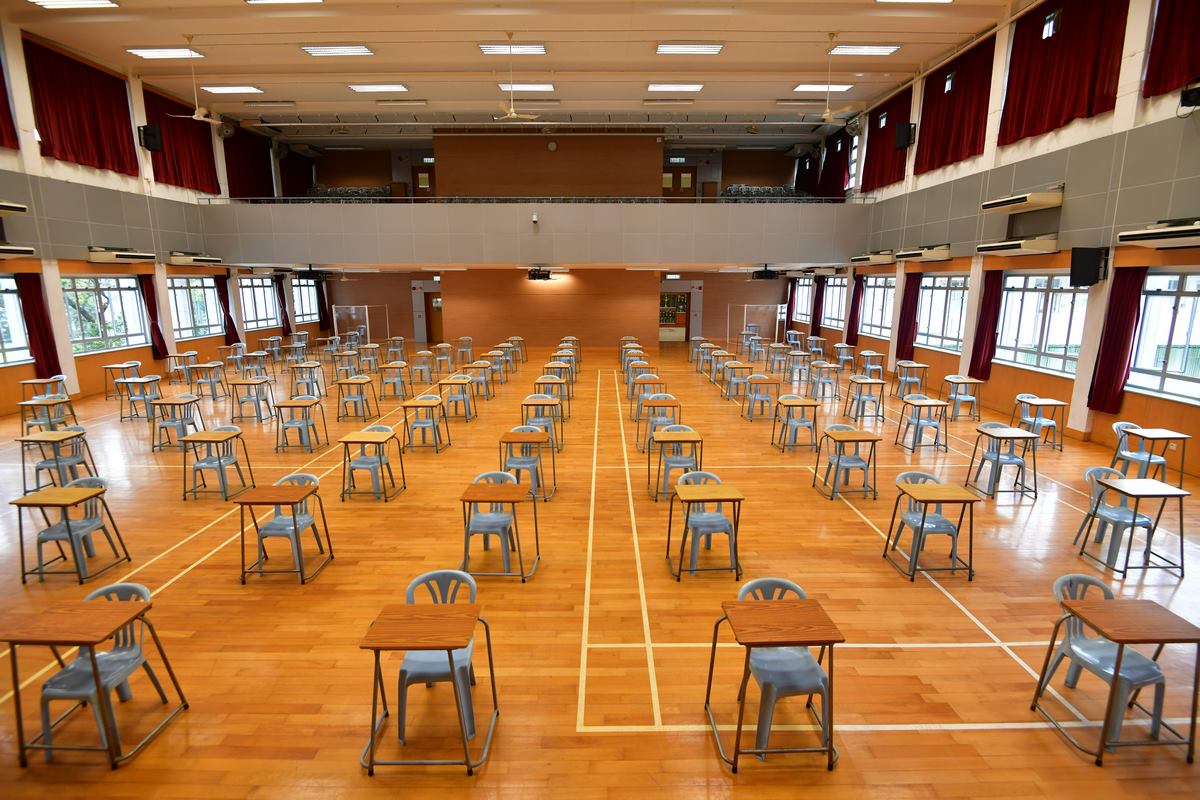
There are two sections in Paper 2, as outlined in the table below.
| Section A | Section B |
|---|---|
| Answer the one compulsory question (with sub-parts). | Answer three questions from a choice of four. |
| Based on interpreting and analysing source material relevant to a real economic situation. | Each question is worth 20 marks and consists of four parts: (a) 2 marks, (b) 4 marks, (c) 6 marks, and (d) 8 marks. |
| Each question part is based on one or more topics drawn from the IGCSE syllabus content. | Each question part is based on one or more topics drawn from the syllabus content. |
| The source material contains written information and may include diagrams and tables. Students should use relevant information from the source material in their answers. | Each question is introduced by stimulus material that provides a context. Students should refer to this context and/or use other relevant examples they have studied, where appropriate. |
| Calculations and diagrams may be required. | Calculations and diagrams may be required. |
| Assessment objectives examined: AO1 (Knowledge and understanding), AO2 (Analysis), AO3 (Evaluation). | Assessment objectives examined: AO1 (Knowledge and understanding), AO2 (Analysis), AO3 (Evaluation). |
| 20 marks | 60 marks |
Keep this page bookmarked for regular updates with more Paper 2 practice questions being added to support students in preparation for their exams.
Return to the Exams homepage

All materials on this website are for the exclusive use of teachers and students at subscribing schools for the period of their subscription. Any unauthorised copying or posting of materials on other websites is an infringement of our copyright and could result in your account being blocked and legal action being taken against you.