6.2.2 Causes & consequences of changes in globalisation
Topic 6.2.2 - Causes and consequences of changes in globalisation
This section of the Cambridge IGCSE syllabus requires students to understand four causes of changes in globalisation and their effects on six areas of the economy:
1. Causes of changes in globalisation:
- changes in trade restrictions
- changes in transport costs
- changes in communication costs
- movement of multinational companies (MNCs)
- Effects of changes in globalisation on:
- international trade
- competition
- the environment
- migration
- income distribution
- economic development
Recall that globalisation is the process through which economies become increasingly connected and dependent on one another. For example, a firm may design a product in one country, purchase components from several others, assemble it elsewhere, and sell it worldwide.
Globalisation connects economies through international trade, investment, communications, and the movement of people. This section of the syllabus examines why these connections change and how the changes affect individuals, firms, governments, and the environment.

Greater globalisation occurs when international trade, investment, and other economic links between countries become stronger. In contrast, reduced globalisation occurs when economies become less internationally integrated, perhaps due to geopolitical conflicts and international trade disputes.
Changing patterns of globalisation occur when multinational companies redirect trade and investment towards different countries. A reduction in trade between two countries does not necessarily mean that world trade falls overall.
The Cambridge IGCSE syllabus specifies the following four causes of changes in globalisation:
- changes in trade restrictions
- changes in transport costs
- changes in communication costs
- movement of multinational companies (MNCs)
1. Changes in trade restrictions
Lower trade restrictions (freer international trade) make it easier and cheaper for individuals and firms to exchange goods and services internationally. For example, reducing tariffs lowers the tax imposed on imports, while relaxing quotas allows access to a greater quantity of imports.
Foreign products may become more competitive, encouraging consumers and firms to purchase them. Domestic producers may also gain access to larger overseas markets, strengthening international trade links and increasing their sales revenue.
In contrast, higher trade restrictions can have the opposite effect. Tariffs, quotas, and embargoes (bans) may reduce trade between affected countries. However, firms may respond by buying from alternative suppliers or moving production to another country.

Trade disputes and embargoes can weaken global economic links
Case Study 1 - The World Trade Organization (WTO)
The WTO promotes globalisation by providing a platform for countries to negotiate lower trade barriers and agree international trading rules. For example, its Trade Facilitation Agreement, which came into force in 2017, aims to simplify customs procedures. This can reduce delays and trading costs, making it easier for firms to access overseas markets.
Case Study 2 - US tariffs 🇺🇸
In 2025–2026, higher US tariffs (import taxes) increased costs for American firms importing goods and components. Some US firms switched overseas suppliers, while others raised prices or absorbed costs through lower profit margins. These responses show how trade restrictions can redirect global supply chains* and harm domestic firms, rather than simply encourage production to return home.
*Global supply chains are networks of firms in different countries that work together to produce and deliver goods or services. For example, a product may be designed in one country, manufactured using materials and components from other countries, and sold to customers worldwide.
Common mistake 1!
Globalisation and free trade are not the same. Free trade means international trade without restrictions such as tariffs and quotas. Globalisation is broader as it also includes overseas investments, communications, production facilities across different countries, and the movement (migration) of people.
2. Changes in transport costs
Falling transport costs make it more profitable to trade over longer distances. Containerisation, larger ships, improved ports, and more efficient transport networks can reduce the cost of moving each unit of output. Containerisation involves packing goods into large, standardised metal boxes that transfer easily between ships, trains, and lorries, reducing handling costs, loading times, and damage to goods.
Lower transportation costs mean that firms can purchase inputs (raw materials and component parts) from overseas suppliers and sell products internationally at more competitive prices. It also becomes easier to divide production between countries.
In contrast, rising transport costs can weaken these global links. For example, higher fuel prices, congestion, conflict, or disruption to shipping routes increase delivery costs and uncertainty. Therefore, firms may switch to suppliers closer to their customers.
Case Study 3 - Lost at sea
In early 2024, attacks on shipping led many vessels to avoid the Red Sea and travel around southern Africa. The International Monetary Fund (IMF) reported that these diversions added at least ten days to journeys on average. Longer routes increased costs and disrupted international supply chains.
3. Changes in communication costs
Broadband, mobile networks, email, video conference calls, and other online platforms allow information to move quickly and cheaply. Some services can even be supplied internationally without either the producer or consumer travelling. For example, software development, online tuition, and accounting services can be delivered remotely.
Lower communication costs make it easier for firms to find customers and suppliers, compare prices, and coordinate activities across countries.
In contrast, higher communication costs or reduced access can make international operations more difficult. Expensive internet connections, unreliable networks, or restrictions on communication may discourage firms from serving overseas markets.
Case Study 4 - India’s IT service exports 🇮🇳
India attracts overseas demand for software development and IT support because it has a large pool of technically skilled workers, English-language expertise, and relatively competitive labour costs. These advantages help Indian firms serve foreign customers efficiently.
Digital communication makes these services easier to deliver internationally. For example, a UK or US firm could hire a team in India to develop its website. They could discuss requirements through virtual video calls, share files through cloud storage platforms, and resolve technical problems using remote-access software.
Lower communication costs therefore allow domestic firms to purchase specialist services internationally without workers or customers travelling abroad, thereby strengthening globalisation.
4. Movement of multinational companies
Multinational companies (MNCs) strengthen international connections when they establish or expand overseas operations. Their activities can create flows of foreign direct investment (FDI), raw materials, components, finished products, technology, and specialist skills knowledge between countries.
Multinational companies may also choose to relocate production to gain access to lower costs, skilled workers, raw materials, and/or growing markets.
However, MNCs may also close overseas operations or move them elsewhere for reshoring or nearshoring purposes. Reshoring means bringing production back to the home country, while nearshoring means moving it closer to the main market. Such decisions can reduce some international links while strengthening others.
Case Study 5 - The presence of MNCs in Vietnam 🇻🇳
The OECD reported in 2025 that foreign-owned firms produced approximately 73% of Vietnam’s exports. Their role illustrates how foreign direct investment (FDI) from MNCs can connect a host economy to international production networks and overseas markets.
Note that these four causes of changes in globalisation often reinforce one another. For example, lower tariffs may encourage FDI from MNCs, while cheaper transport and communication costs make the resulting supply chains easier to operate, thereby strengthening globalisation.
Common mistake 2!
Do not assume all MNC movement increases globalisation. An MNC opening a factory overseas can strengthen international trade and investment links. However, bringing production back to its home country (reshoring) may reduce these links, while moving between foreign countries may simply change their location. So, always explain your answers in the correct context.
The Cambridge IGCSE syllabus specifies the following six effects of changes in globalisation:
- international trade
- competition
- the environment
- migration
- income distribution
- economic development
1. International trade
Greater globalisation can further increase international trade by giving producers access to larger markets and consumers access to more overseas products. Countries can specialise in activities in which they are relatively cost efficient. Firms may also import cheaper or better-quality inputs, improving their international competitiveness.
However, stronger international connections increase exposure to overseas disruptions. A shortage of components in one country, for example, can interrupt production elsewhere.
Reduced globalisation may encourage firms to buy from domestic suppliers, reducing the reliance on overseas deliveries. However, domestic alternatives may be more expensive or offer less choice for consumers and firms, while retaliatory trade restrictions can reduce export opportunities. For example, US tariffs in 2018–2019 and 2025–2026 protected some American manufacturers but also raised imported input costs and exposed exporting countries like Canada and China to retaliatory tariffs.
Tariffs increase costs of imported goods and services
Top tip 1!
It is possible that globalisation can simultaneously increase exports and imports. It does not automatically create a trade surplus for any particular country or improve its current account of the balance of payments.
2. Competition
Greater globalisation exposes domestic firms to more overseas competitors. This can have both positive and negative consequences. For example, greater globalisation may encourage:
- Lower prices, as firms compete for customers.
- Higher quality and better service, as consumers gain from increased choice and more alternatives.
- Greater efficiency, as firms seek to reduce costs (to remain internationally competitive).
- Innovation, as firms develop new products and production methods to entice customers.
However, less competitive domestic firms may lose sales or even close, causing unemployment in the domestic economy. Large MNCs may eventually dominate markets if smaller competitors disappear.
In contrast, reduced globalisation may protect some domestic firms and jobs - at least in the short run. Nevertheless, weaker competitive pressures may allow higher prices and reduce incentives for domestic firms to improve their productive efficiency.
Case Study 6 - General Motors (2025-2026)
In January 2026, US carmaker General Motors (GM) reported $3.1 billion in gross tariff costs for the year ended 2025. Although GM found ways to cover some of these costs, the tariffs still reduced the company's profits. Like most other US car makers, GM imports vehicles and components, so trade restrictions intended to protect US manufacturing also affected its own supply chains. This illustrates how domestic firms can face higher costs despite receiving trade protection from foreign competition.
3. The environment
Greater globalisation and international trade can damage the environment when expanding production and transport increase pollution, greenhouse gas emissions, and resource depletion (such as deforestation). Firms may also relocate environmentally damaging activities to countries where regulations are weaker or less effectively enforced.

Deforestation is a common consequence of globalisation
However, globalisation can improve access to cleaner technologies (such as solar energy sources), environmental knowledge, and less expensive renewable energy equipment. International investment may also introduce more efficient production methods.
Whilst reduced globalisation may shorten some supply chains, locally produced goods are not necessarily greener (environmentally friendly). Their environmental impact also depends on specific production methods, energy sources, and transport efficiency.
Case Study 6 - The growing use of solar panels
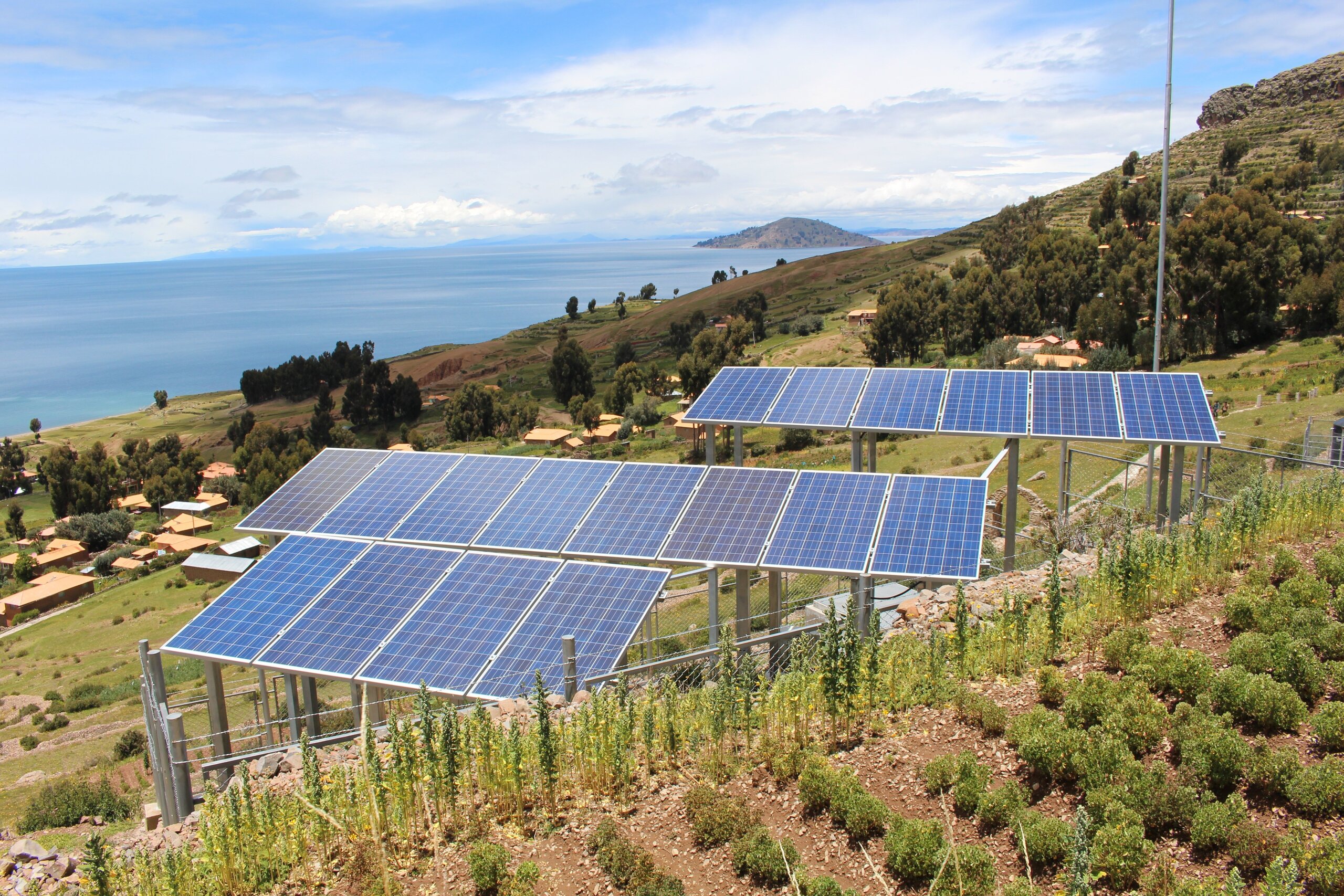
China illustrates how globalisation can support cleaner energy while creating environmental costs. The International Energy Agency's (IEA) 2022 report found that China had more than 80% of the world’s capacity to make solar panels. Chinese solar exports exceeded $30 billion in 2021, supplying equipment to overseas markets - equivalent to approximately $82.2 million per day or $3.42 million per hour!
Government support, investment, innovation, and large-scale production helped lower unit costs. Economies of scale allowed Chinese producers to spread costs over greater output, making solar equipment more affordable internationally. Cheaper solar panels can encourage households and firms to install solar power, reducing reliance on fossil fuels in the long run.
However, manufacturing panels requires energy and raw materials. The IEA's report estimated that coal generated over 60% of the electricity used in solar manufacturing worldwide. Production therefore created carbon emissions even though the finished panels generated low-carbon electricity.
Nevertheless, the IEA estimated that panels typically needed four to eight months of operation to offset manufacturing emissions, compared with a lifespan of approximately 25 to 30 years.
Top tip 2!
Do not assume that greater trade and globalisation always increase (or always reduce) environmental damage. The environmental effects of globalisation depend on both production methods and how products are used by consumers. For example, pollution during manufacturing must be weighed against potential long-term reductions in carbon emissions.
4. Migration
Migration refers to the movement of people from one area or country to another to live there temporarily or permanently, typically due to greater economic opportunities. Greater globalisation can encourage migration by making overseas employment opportunities easier to identify and reach. MNCs may also transfer employees between countries.
For destination countries, immigration (the movement of people into a country) can increase the domestic labour supply, fill job vacancies, and bring additional employment skills. However, rapid population growth caused by migration may increase demand for housing, healthcare, education, and transport. This may lead to higher rents, longer healthcare waiting times, overcrowded classrooms, and greater traffic congestion.
For origin countries, emigration (the movement of people out of a country) can reduce unemployment if people who cannot find jobs leave to work abroad. Those working overseas may send part of their earnings to relatives at home. These payments, called remittances, increase household incomes and help families pay for food, housing, healthcare, and education. However, the loss of skilled workers may create labour shortages, sometimes described as a “brain drain”.
In contrast, reduced globalisation or tighter migration restrictions may limit the international mobility of labour. Nevertheless, trade and migration do not always move together. For example, remote work (such as work from home) can allow services to cross borders without workers having to physically migrate.
Case Study 7 - Migration within the European Union

The EU’s free movement of workers allows citizens within the European Union (EU) to seek employment and work in another member country without a work permit. This reduces legal barriers to migration, making it easier for workers to move towards available jobs.
The scale of this is substantial. According to Eurostat, on 1 January 2025, around 14 million EU citizens lived in another EU country. These figures include workers and other residents, such as family members.
Top tip 3!
Whilst greater economic integration can improve access to jobs and workers, the economic benefits depend on the specific skills of migrant workers, employment opportunities overseas, and the ability of housing and public services to meet demand.
5. Income distribution
The gains and losses from globalisation are unlikely to be shared equally. Within a country, owners and workers in successful exporting firms may gain higher incomes, i.e., wages and profits. Consumers may benefit from cheaper imports, including lower-income households whose purchasing power increases, as well as greater choice.
However, workers may lose their jobs if consumers switch to cheaper imports or firms move production overseas to reduce costs. For example, a domestic clothing factory may close because it cannot compete with lower-priced imported clothing, leaving its workers unemployed.
Meanwhile, workers with skills needed in growing industries, such as artificial intelligence (AI) and software development, may receive higher wages as demand for their labour increases. As the unemployed factory workers may lack these skills and struggle to find new jobs without retraining, this can widen income differences between the two groups of workers.
Between countries, globalisation can narrow income differences if lower-income economies attract foreign direct investment (FDI) and sell more goods and services overseas. For example, a foreign firm opening a factory can create jobs, provide training, and increase workers’ earnings in the host country.
However, political instability or a lack of appropriate infrastructure may discourage FDI because firms fear disruptions to their operations. Countries facing these barriers may attract less investment and experience slower income growth, widening the gap with more successful economies.
Reduced globalisation can protect some workers from foreign competition. For example, tariffs on imported clothing may help domestic factories retain customers and jobs. However, consumers may pay higher prices. Also, if trading partner countries impose tariffs in retaliation, domestic exporters may lose overseas customers, reducing their sales and employment.
Top tip 4!
Do not assume that globalisation always increases income inequality. Explain how different stakeholder groups are affected. For example, workers in exporting firms may earn more, while those facing foreign competition from cheaper or better quality imports may lose their jobs.
Also, evaluate how education, retraining, and government support can help more people benefit from changes in globalisation.
Common mistake 3!
Too often, students assume greater globalisation benefits everyone, and equally. This is unlikely to be the case in reality. For example, workers in successful exporting firms may gain jobs and higher wages, while those in firms facing cheaper import substitutes may lose their jobs. Countries with skilled workers and reliable infrastructure may also benefit more than those without them.
Common mistake 4!
Students often confuse income inequality with poverty. Poverty concerns people lacking sufficient income to meet their basic human needs, while income inequality concerns differences in earnings between people or households. Poverty can fall while inequality rises if poorer individuals and households earn more but wealthier individuals and households’ incomes grow faster.
6. Economic development
Greater globalisation can support economic development through:
- Employment and higher income, helping more households to be able to afford necessities. For example, a foreign MNC opening a clothing factory can provide paid work for people who were previously unemployed. Their earnings can help families afford better food, housing, healthcare, and education.
- Investment and technology transfer, increasing productivity. For example, an MNC may introduce modern machinery and train local workers to use it, enabling them to produce more output per hour. These skills can also benefit domestic firms when trained workers move to new jobs.
- Access to larger markets, allowing domestic firms to expand. For example, a domestic coffee producer that begins exporting can sell to overseas customers rather than relying only on local buyers. Higher sales may allow it to hire more workers and purchase better equipment, supporting employment and productivity.
- Additional government revenue, which may be used to finance public services. For example, expanding firms may pay more tax on their profits, while newly employed workers may pay income tax. The government can use this tax revenue to build schools, improve hospital services, and provide clean water, thereby raising living standards in the economy.
- Access to goods and services, including machinery, medicines, and educational resources. For example, imported medical equipment can help hospitals diagnose illnesses, while online courses can give students access to subjects unavailable locally. These benefits depend on whether households and public services can afford the products and have the electricity, internet access, or trained staff needed to use them.
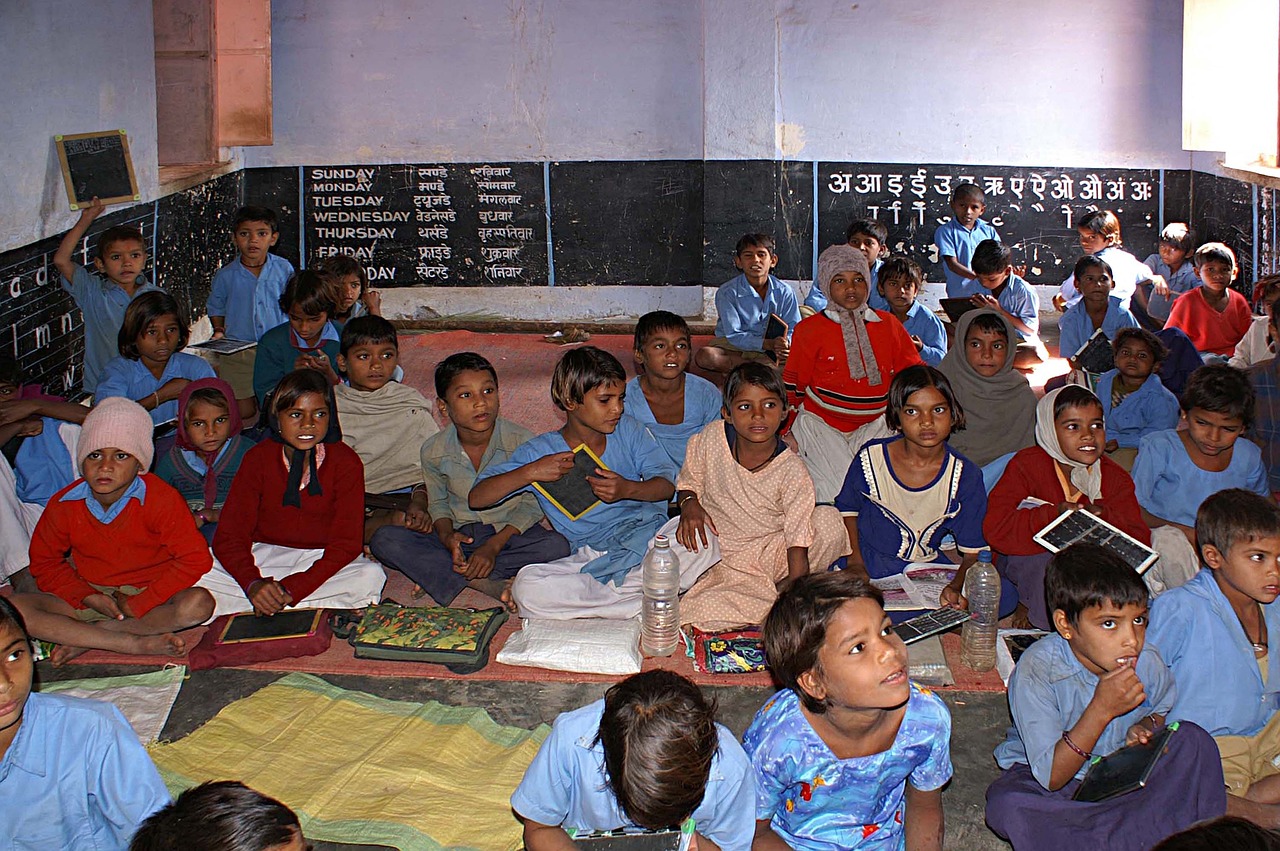
Improved education is a vital aspect of economic development
However, the benefits of economic development may be limited if employment is insecure, working conditions are poor, profits of multinational companies are sent abroad, or environmental damage harms local communities.
Also, over-dependence on a narrow range of exports or foreign MNCs for employment can also leave an economy highly vulnerable to overseas shocks.
On the other hand, reduced globalisation may allow some domestic industries to develop, but it can restrict access to investment, technology, and affordable products from overseas.
Case Study 8 - Vietnam’s development 🇻🇳
Vietnam shows how globalisation can create jobs, raise incomes, and develop workers’ skills. In 2024, the World Bank reported that around half of Vietnam’s jobs depended directly or indirectly on exports. This includes factory workers producing goods for overseas customers and employees of firms supplying those factories. However, the World Bank reported that foreign firms accounted for 73% of Vietnam’s exports, while local firms’ participation in global supply chains fell from 35% in 2009 to 18% in 2023.
Samsung, South Korea's largest MNC, has established major production facilities in Vietnam. In July 2024, Vietnam’s government reported that Samsung had invested $22.4 billion, created approximately 90 000 jobs, and exported $55.7 billion of products during 2023. Employment provides household income, while purchases from local suppliers can support further jobs.
This case study highlights that there are both opportunities and limitations as consequences of changes in globalisation. Foreign investment can create employment and skills, but broader development depends on whether domestic workers and firms gain access to these opportunities rather than over-relying on foreign MNCs.
Top tip 5!
Economic growth means an increase in a country's real national output. Economic development involves broader improvements in living standards, including healthcare, education, and reduced poverty. Economic growth does not automatically benefit everyone.
Common mistake 5!
Do not equate higher GDP (economic growth) with economic development. Higher GDP means greater real output, but it does not guarantee better living standards for everyone. Economic development also involves improvements in and access to healthcare, education, housing, as well as environmental sustainability.

To test your understanding of this topic in the syllabus (Causes and consequences of changes in globalisation), have a go at answering the following true or false questions.
| No. | Statement | True or False? |
1. | Globalisation involves increasing economic connections between countries through trade, investment, communication, and the movement of people. | True |
2. | Reducing tariffs on imported goods generally makes international trade more expensive. | False - it reduce import costs |
3. | The World Trade Organization (WTO) promotes globalisation by helping countries negotiate trade rules and reduce trade barriers. | True |
4. | Higher shipping costs encourage firms to purchase more raw materials from distant overseas suppliers. | False - it does the opposite |
5. | Lower communication costs allow firms to provide services internationally without workers or customers travelling abroad. | True |
6. | Multinational companies (MNCs) can only strengthen globalisation when they relocate their production facilities. | False - reshoring can weaken global links |
7. | Foreign direct investment (FDI) by MNCs can strengthen globalisation by connecting host countries to international production networks. | True |
8. | Greater international competition can encourage domestic firms to improve their efficiency and innovate. | True |
9. | Greater globalisation can improve access to cleaner technologies, such as more affordable solar panels. | True |
10. | Greater globalisation automatically improves a country's current account balance by increasing its exports. | False - imports can also rise |
11. | Goods produced locally are not necessarily more environmentally friendly than imported goods as this also depends on production methods, energy sources, and transport efficiency, not simply the distance travelled. | True |
12. | Immigration can increase the supply of labour in a destination country and help firms fill job vacancies. | True |
13. | Remittances are payments made by governments to attract foreign workers into their economies. | False - money sent home by migrant workers |
14. | Greater globalisation can increase income inequality within a country if skilled workers benefit while other workers lose their jobs. | True |
15. | An increase in a country's real GDP guarantees improvements in healthcare, education, and living standards for all its citizens. | False - depends of income/wealth distribution |

To test your understanding of the contents in this section of the IGCSE Economics syllabus (Causes and consequences of changes in globalisation), have a go at the following tasks on Quizlet.
You can choose your preferred Quiz format from the drop down menu (Flashcards, Match, Learn, Test, and/or Spell).
Return to the Topic 6.2 - Globalisation and trade restrictions homepage
Return to the Topic 6 - International trade and globalisation homepage
