Unit 6.3: Environmental issues affecting business

Introduction
Environmental concerns and ethical issues as both opportunities and constraints for businesses and how businesses impact on the environment. This page also has an examination question on unit 6.5, the role of pressure groups.
Teacher notes
Lesson time: 95 minutes
Lesson objectives: In this lesson students will learn how environmental concerns and ethical issues as both opportunities and constraints for businesses. How business activity can impact on the environment, e.g. global warming and the concept of externalities. Learners will also need to consider the possible external costs and external benefits of business decisions and how business can contribute to sustainable development e.g. the impact of pressure groups and the role of legal controls over business activity affecting the environment.
1. Beginning activity - Begin with the opening video and questions focused on environmental and ethical issues. [15 minutes]
2. Physical process - Distribute the handout to students and allow 5 minutes to read the activities and understand the key terms. [5 minutes]
3. Discussion - Activity two includes discussion questions on this topic. [10 minutes]
4. Video activities - Activity 3 contains short questions that students will answer using information contained in the video. [10 minutes]
5. Activity - Activity 4 requires students to brainstorm their ideas. [10 minutes]
6. Grading practise - Activity 5 offers the chance for your students to provide a grade and feedback on an examination question. [15 minutes]
6. Assessment - The examination questions can be completed as a class exercise or homework - a mark scheme is included. [30 minutes]
Key terms:
Externality - Costs or benefits of a companies actions which are felt/paid by third parties, examples include pollution emitted from factories or the impact on other businesses.
Sustainable development - The principle that aims to meet human development goals without sacrificing future development, for example, development that does not unsustainably deplete natural resources or ecosystems needed by humans.
Legal controls (laws set by government) - Examples (from the UK) include: the Employment Acts 2022/23, European data protection laws, disabilities, discrimination, Equality act, Health and safety act, minimum wage legislation and workplace pensions laws.
Ethics - Refers to the moral principles, policies, and values that govern business activity that goes beyond simply abiding behind the legal requirements to establish a code of conduct. Ethics includes subjects like social responsibility, insider trading, discrimination, corporate governance, and bribery.
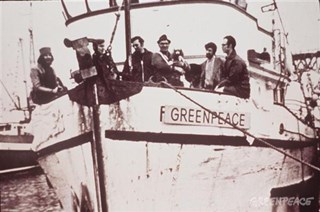
Pressure groups - An organised group of people that aim to influence the policies and actions of the government or businesses in favour of a specific cause or movement e.g. Greenpeace, trade unions and business pressure groups.
Social movements - Similar in many outlook and intent to pressure groups but often lack the organisational structure, relying instead on mass social media campaigns to influence governments and business.
Pollution permits - An attempt to provide market incentives for firms to reduce pollution and reduce the external costs by setting a quota or limit which organisations would be allowed to pollute. If they wish to pollute beyond this then they have to purchase a pollution permit from other companies that do not require them.
Opening activity
Begin by watching the following short video and then answer the questions underneath.
(a) Describe some of the external costs and benefits of business activity.
Pollution, traffic, harm to the environment plus jobs are created, better infrastructure and overall quality of life due to improvements in services, health and education.
(b) Business can contribute to sustainable development by doing which 4 things?
Using renewable energy, recycling and using waste, lean production and reducing packaging and / or creating biodegradable waste.
(c) How do pressure groups use consumer boycotts to influence business demand?
By encouraging or arranging a mass boycott of certain products/business pressure groups to force businesses to change their production patterns. Similarly, an organisation that presents a positive sustainable development message may be rewarded by higher sales and may also be able to charge a premium price for their goods - such as 'fair trade' products or organically produced products.
(d) Identify the role of governments in ensuring ethical business practices?
Through changes to law such as the banning of dumping industrial waste, which issue fines and incentivises firms to pollute less.
(e) How do pollution permits encourage firms to pollute less?
A pollution permit allows a business to pollute up to a certain amount and if they need to exceed this then they must buy the allowance from a firm that it polluting under their quota. By linking pollution to cost directly the government is rewarding low polluting firms, who can profit from selling their allowance to another and punishing high polluters the government can reduce overall pollution levels.
(f) Explain some examples of the trade off businesses must make between profits and ethics?
Examples include whether to hire child workers (in those nations where the practise is legal), whether to purchase more expensive environmentally friendly supplies, wages for the lowest paid workers, working conditions, bribes.
Activity 2

Consider the following two companies and explain which you most agree with:
Company A produces very cheap washing powder and detergents which they sell for a low price. The products are popular with low-income households and their products are also exported to the developing world were they sell well. However, the company pays low wages to their production staff and has faced a significant number of law suits for excessive levels of pollutants emitted from their factories.
Company B produces in a smaller market to mainly middle and high income families. Its operating costs are relatively high which they claim is the result of a very high level of scrutiny amongst their suppliers. All of their products have received the highest environmental kite mark standard and worker retention is high. The company is known to pay high wages and offer good working conditions. The company enjoys a good reputation.
Activity 3 - Externalities
Using the following video answer the questions that follow:
(a) What are 'externalities'?
External costs and benefits, received by and paid for by third parties.
(b) How do governments use taxes, subsidies and legislation to encourage positive externalities, while reducing negative ones?
An example might be energy. Currently carbon based sources of energy are heavily taxed (though this was not always the case), while energy sources such as nuclear, wind power and solar energy are subsidised - in part from the tax revenue received from taxing carbon based energy sources. In some cases, governments will simply ban the production of a product if they believe that the negative externality is simply too high.
Activity 4: Group discussion
You are given a choice by the government on whether a new law should be introduced. This law would force companies to comply with much higher standards of environmental legislation that will raise prices significantly for customers. You have the following options:
- to maintain laws at their current level
- to pay higher prices but for higher levels of environmental service
- you can also vote to pay lower prices for goods but firms will then face fewer restrictions on their activities.
How will you choose to vote?
Activity 5 - Grading practise
Start by reading the following question, followed by the accompanying student response. Then mark the response based on the following criteria:
AO1 Knowledge and understanding (out of 2),
AO2 Application (out of 2)
AO3 Analysis (mark out of 6)
Analyse how any two changes in the legal environment might affect a restaurant. [10]
Example student response
The legal environment refers to the rules set by government to regulate business activity and acts as both a constraint and an enabler for the restaurant’s activities. Two examples of changes to the law that are likely to have an impact on a restaurant business might be changes to the level of minimum wage and laws covering health and safety legislation.
Many restaurants have a proportion of its workforce receiving the minimum wage or just above this level. As a restaurant serving customers it is also bound by health and safety laws with respect to food labelling, expiry dates and food hygiene. At first glance the restaurant is likely to face a reduction in profits through increasing labour costs in the industry. Catering is a labour-intensive industry and any rise in minimum wage is likely to increase overall costs significantly.
However, restaurants may also see some benefit from the rise in minimum-wage levels, despite the higher costs involved. Evidence from management theorists suggests that higher wages may well motivate workers as well as help the business retain workers.
Any change to health and safety standards might also have a direct impact on the restaurant business. Any changes will require additional health and safety training for employees. Training incurs costs on the business as well as taking employees away from working directly.
On the other hand, by improving staff training, restaurants may benefit from an improvement in the quality of employees and make the restaurant more efficient, improving service and reducing complaints from customers.
In conclusion, therefore, while restaurants will be fearful of changes to minimum wage and/or health and safety it may be able to turn any changes to its advantage or at least minimise any costs involved. Any such measure will of course require the business to be proactive in any decision-making and grasp the opportunities provided.
Examiner comments
AO1 Knowledge and understanding (out of 2)
The student has identified and understood two relevant changes. 2/2
AO2 Application (out of 2)
Importantly, the student took care to identify both opportunities and threats to the changes identified. The response also makes some use of the extract. 2/2
AO3 Analysis (out of 6)
The two changes identified are appropriate for the business in the extract and provide sufficient opportunity for the student to apply relevant business theory and also include elements of the passage. 5/6
Total:
7/8 marks
Activity 6 - Link to the assessment
Text:
OP is an oil producer based in country X. It is a public sector company and plan to build a 500 km pipeline across the nation but will need to, first, secure planning permission from the government. This will not be guaranteed, however, with some environmental pressure groups actively opposed to the pipeline. If allowed the pipe line will create 2000 skilled construction jobs and reduce the need for the country to import oil.
(a) Consider four legal controls will affect OP. Which legal control will have the greatest effect on TT? Justify your answer. [4]
- Minimum wage legislation
- Health and safety at work act
- Equalities legislation
- Environmental protection laws.
(b) Identify and explain two ways a pressure group might try to influence the actions of OP [4]
When grading this response award 1 mark for each way identified and 1 for each explanation in context
Relevant points include:
The pressure group could create negative publicity OR publish information to alert the public OR write to newspaper [k] about the pipeline [app]
They could also organise customer boycotts [k] of its oil [app]
The might also arrange demonstrations or protests OR rally opposition [k] against this public corporation [app]
Finally, they could lobby OR petition OR send letters to government [k] to prevent planning permission [app]
(c) Do you think the Government should allow OP to build the pipeline? Justify your answer. [6]
When grading this response award 1 mark each for knowledge and application, plus two for relevant development of point(s)analysis and 2 for evaluation (justified decision made as to whether the Government should allow GOP to build the pipeline)
Relevant points include:
Government should allow GOP to build the pipeline because it creates jobs [k], with 2000 jobs created [app] helping reduce unemployment [an] but jobs may disappear after work finished [an]
The pipeline will also protect vital industry [k] reducing the number of imports [app] helping country become self-sufficient [an]
The pipeline could help develop infrastructure/build new roads [k]
The pipeline may contribute to pollution [k] which is why pressure groups are concerned [app]
The pipeline may also use up natural resources [k] as they produce oil [app] meaning fewer resources available for future generations [an]
It could conflict or help Government with other objectives [k] as this is a public corporation [app]
Will reduce the need for oil imports [k] so a positive balance of payments [an]
(d) Do you think businesses should always respond to environmental pressures? Justify your answer. [6]
When marking this response award up to 2 marks for identification of relevant points, 2 marks for relevant development of points and 2 marks for a justified decision as to whether manufacturing businesses should always respond to environmental pressures.
Relevant points include:
Reduces the risk of a customer boycott [k], enhancing brand image / reputation [k] leading to more potential customers / revenue [an] ·
It might help recruit / retain employees [k] and help attract investors [k] so raise more capital [an]
Reduces risk of legal action/fines [k] avoiding bad publicity [an]
May need to buy new equipment [k] which increases costs [an] leading to higher prices [an]
Might reduce productivity [k] which could lower profit margin [an]
May need to find new suppliers of raw materials [k] leading to higher unit costs [an]
Justification might include: that yes they should always respond to environmental pressures, although this could mean the business has to find new suppliers of raw materials [k] increasing unit costs [an]. However, responding to environmental pressures can improve the reputation of the business [k] leading to an increase in revenue [an]. The additional revenue gained could offset the costs of responding to environmental pressures. So, if they can find the resources they need at a competitive price, they should. [ev]
The activities on this page are available as a PDF file at:  Activities