Unit 6.4: Ethical issues affecting business

Introduction
This lesson looks at how business activity can impact on the environment, but also contribute to sustainable development. Students will also learn how and why business might respond to environmental pressures and ethical issues, e.g. child labour, paying fair prices to suppliers. Finally, the page introduces the development economics course and focusses on the goals set out by the UN, to improve the lives of the poorest sections of the planet.
Teacher notes

Lesson time: 60 minutes
Lesson objectives: Outlining the current status of international development goals, including the Sustainable Development Goals. Students will also need to understand how and why a business might respond to environmental pressures and opportunities, e.g. pressure groups and the role of legal controls over business activity affecting the environment, e.g. pollution controls. Finally, students will need to understand some of the ethical issues a business might e.g the conflict between profits and ethics and consider how businesses might react and respond to ethical issues, e.g. child labour, paying fair prices to suppliers. A question students will need to discuss, for example, is whether or not they are prepared to pay higher prices for more ethically sourced products and if so, how much extra?
1. Beginning activity - Begin with the opening video and then discuss the sustainable development goals as a class. Is the world on target to meet these goals or not? (Allow 15 minutes in total for the video, discussion and questions on activity 1)
2. Processes - Technical vocabulary - the students can learn the background information from the videos, activities and the list of key terms. (allow 5 minutes to read the key terms)
3. Activity 2 - Students can watch the short video and summarise the SDGs. (10 minutes)
4. Activity 3 - Video activity on what businesses can do in response to external pressures from stakeholders (15 minutes)
5. Investigation - Exercise on ethics in business (10 minutes)
6. Fun simulation on development - (5 minutes)
Key terms:
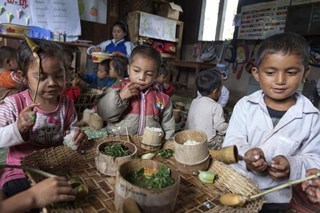
Development - Measures improvements in individual freedom, reducing poverty as well as the provision of public services – education, health care and the maintenance of law and order. Economic development is measured by the HDI (human development index).
Externalities - A cost or benefit that is caused by one party but financially incurred or received by another. Externalities can be negative or positive.
Sustainable development goals - 17 life-changing goals, outlined by the UN in 2015. These global goals, also known as the Sustainable Development Goals (SDGs), include ending extreme poverty, giving people better healthcare, and achieving equality for women.
Activity 1: Sustainable development goals
Start by watching the following video and then summarise the 5 Ps which form the basis of the sustainable development goals:
The 5 Ps are people, prosperity, peace, partnership and planet.
Activity 2 - Sustainable development
Use the information contained in the video to ask the question, what can be businesses do to contribute towards sustainable development?
- Use renewable energy and upgrade their machinery to more energy efficient ones
- Create products available to all citizens, including in the Developing world
- Lean production which reduces waste
- Invest in upgrading supply and distribution chains so that less paper is used
- Use local suppliers where possible?
- Monitor suppliers to ensure that they are paying their workers fairly and using less environmentally unfriendly materials
- Pay a living wage to all employers?
Activity 3 - How and why businesses might respond to environmental pressures and opportunities
Using the information contained in the following video answer the question that follows:
(a) Identify the factors that determine how a business might respond?
- the ability of the business to respond i.e. is it in their power to do so?
- how powerful the pressure group is in terms of creating bad publicity, which then affects sales
- the cost of dealing with the problem v the loss of sales
- the corporate views and beliefs of the organisation.
(b) How might a business might respond to environmental pressures
- they might simply accept the judgement and agree to change their behaviours
- compromise i.e. partially agree to the demands i.e. balancing the demands of external stakeholders and internal shareholders
- refuse to accept the demands, possibly by disguising the non-conformity.
- actively confront, challenge or attack the parties putting pressure on the business.
Activity 4 - The role of legal controls over business activity affecting the environment
Research and then make notes on the following laws on the environment and explain the potential impact on businesses. Your notes should recognise that the impacts may be positive as well as negative.
- Environment act
- Clean air legislation
- Clean water act
- Waste management/recycling legislation.
This is a difficult one for governments to balance because when a government imposes excessive rules/legislation on a business then profitability will fall, prices for consumers will rise and impacted organisations will lay off staff. On the other hand some firms may prosper as legislation also drives innovation in green technologies, while all businesses benefit from cleaner air, improved water supply e.t.c.
Activity 5 - Ethical issues a business might face, conflicts between profits and ethics
In pairs or small groups brainstorm whether behaving ethically is at odds with a company's desire to make a profit?
The key is, of course, balance. A company must consider the bottom line when making financial decisions and this means they cannot afford to spend more than they cannot afford on either wages or purchasing supplies. Going out of business would not help either shareholders or the wider community. That said, companies depend on their reputation and an organisation with a poor reputation is likely to suffer from poor sales. Equally, a firm with a good reputation may well enjoy higher sales.
Activity 6: Development simulation
End this lesson with this fun simulation:
The activities on this page are available as a PDF file at:  Activities