August Blog: Anniversaries and site update
Anniversaries
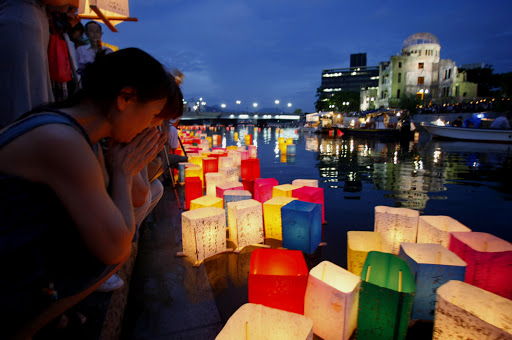
Hiroshima: 80th Anniversary
This month sees the 80th anniversary of the dropping of A-bombs on Hiroshima and Nagasaki.
This significant anniversary has given rise to new media resources for reviewing or covering the pivotal and devastating events of August 1945, so this is a good opportunity to discuss Hiroshima with not only IGCSE History students but with all students.
The BBC will broadcast the following programme on Monday 4th August: What happened at Hiroshima?
The film’s reporter and narrator, award-winning BBC journalist Jordan Dunbar sets the story of Hiroshima against the backdrop of today’s febrile international situation as nuclear brinkmanship is moving front and centre. Jordan looks at what led to the events of August 1945, talks to some of the last survivors of the bombing of Hiroshima – and asks what we can learn to stop history from repeating itself.
What Happened at Hiroshima: BBC World Service documentary for BBC One and iPlayer asks if we can stop history repeating itself (www.bbc.co.uk)
On the 80th anniversary of the bombings of Hiroshima and Nagasaki, Jordan Dunbar hears from the only people to have ever experienced and survived a...
The BBC broadcast another documentary on Hiroshima last year entitled Atomic People. This documentary also combines archival footage with the voices of survivors.
Survivors of the A-bombs are known in Japan as hibakusha and their stories are key for reminding the world of the horrors of nuclear weapons. This article from the BBC to remember the dropping of the A bombs on the 75th annivesrary has interviews from women hibakusha:
50th Anniversary of Helsinki Accords
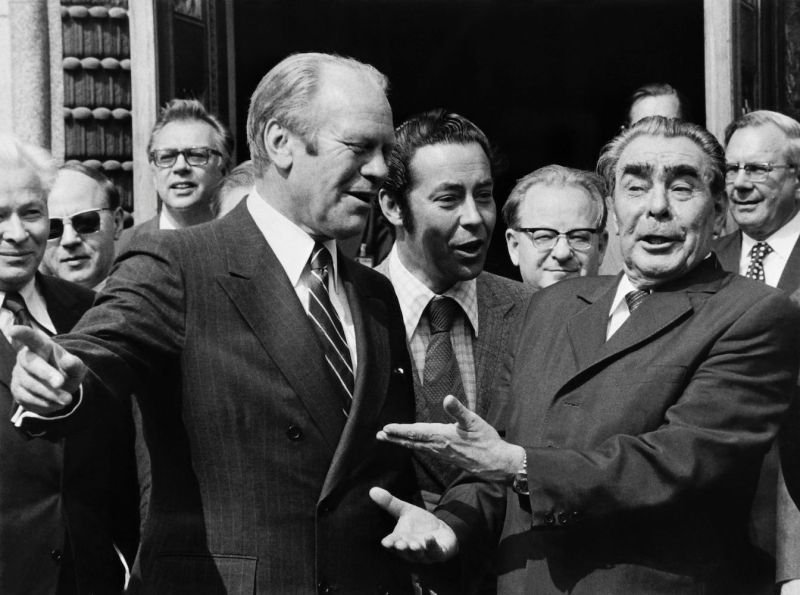
This is not directly covered by IGCSE students studying Core Option B; however, it would be worth discussing with them as it marked a key change in the relationship between the superpowers, and its legacy continues today.
On August 1, 1975, the Helsinki Final Act (also known as the Helsinki Accords) was signed by 35 countries. The Helsinki Final Act was the outcome of the Conference on Security and Cooperation in Europe (CSCE), which began in Geneva in 1973; it was a landmark agreement primarily aimed at easing Cold War tensions and fostering cooperation between the Soviet bloc and the West.
The CSCE evolved into the Organization for Security and Co-operation in Europe (OSCE): it is the world's largest regional security organisation - the only one of which Ukraine, the US and Russia are members - and it continues to operate, now with 57 participating states. However, given Putin's invasion of Ukraine, the media analysis of the success of the Helsinki Accords on this anniversary has been accompanied with discussions of the threats to security and cooperation that Europe now faces, and the extent to which the principles that were established at Helsinki can be maintained, or even renewed.
The statement made by the OSCE following their 50th Anniversary meeting included the following:
Yet, on this anniversary, we must acknowledge a painful truth: these principles have been repeatedly challenged and violated over the past 50 years. Today, the Russian Federation’s ongoing war of aggression against Ukraine constitutes a grave and unprecedented violation of the very principles the Helsinki Final Act was intended to uphold. This unprovoked and unjustified war has inflicted immense human suffering and caused profound damage to the European security order. It is not only an attack on Ukraine, but an assault on the shared commitments of all OSCE participating States.
The following articles are all useful for discussing this anniversary with IGCSE students - particularly those studying the Cold War:
The Office of the Historian gives a good overview of the background and details of the final agreement:
Milestones in the History of U.S. Foreign Relations - Office of the Historian (history.state.gov)
The Helsinki Final Act was an agreement signed by 35 nations that concluded the Conference on Security and Cooperation in Europe,...
This is a timeline of the events leading up to the Helsinki Accords from the Wilson Centre:
Organization for Security and Co-operation in Europe (OSCE) Timeline: 50th Anniversary of the Helsinki Final Act (Wilson Center)
On August 1, 1975, the Helsinki Final Act (also known as the Helsinki Accords) was signed by 35 countries. The Helsinki Final Act was the outcome of...
Another article from The Guardian newspaper discussing the Helsinki Accords in the context of Putins's actions in Europe;
The Helsinki accord was a masterpiece of European diplomacy. Fifty years on, we need its spirit more than ever | Kai Hebel and Richard Davy (the Guardian)
The OSCE hasn t stopped Putin s aggression, but it has the potential to help broker a peace in Ukraine when the time is right, say authors Kai...
Site update
For students taking the November examinations, we have added a practice Paper 2 on the set theme for Option B: How far was Hitler's foreign policy to blame for the outbreak of war in Europe in 1939?
A practice paper for Option A will be added in the next couple of weeks.
Option B: Hitler's Foreign Policy - Nazi-Soviet Pact
Option B: How far was the Nazi-Soviet Pact responsible for the outbreak of war?