October Blog: 80th Anniversary of the UN
Welcome to our October Blog!
November Examination session
Good luck to those of you who have IGCSE exams approaching in November.
Don't forget that we have revision tips on the site for students, as well as revision summary pages and multiple-choice quizzes and flash cards.
In addition, we have uploaded Paper 2 source questions on the set themes for Option A and Option B to provide more practice opportunities for students:
Paper 2: November 2025
Below you will find practice papers for the November 2025 examination.
A: To what extent did the lives of African Americans in the South improve as a result of Reconstruction?
B: How far was the Nazi-Soviet Pact responsible for the outbreak of war?
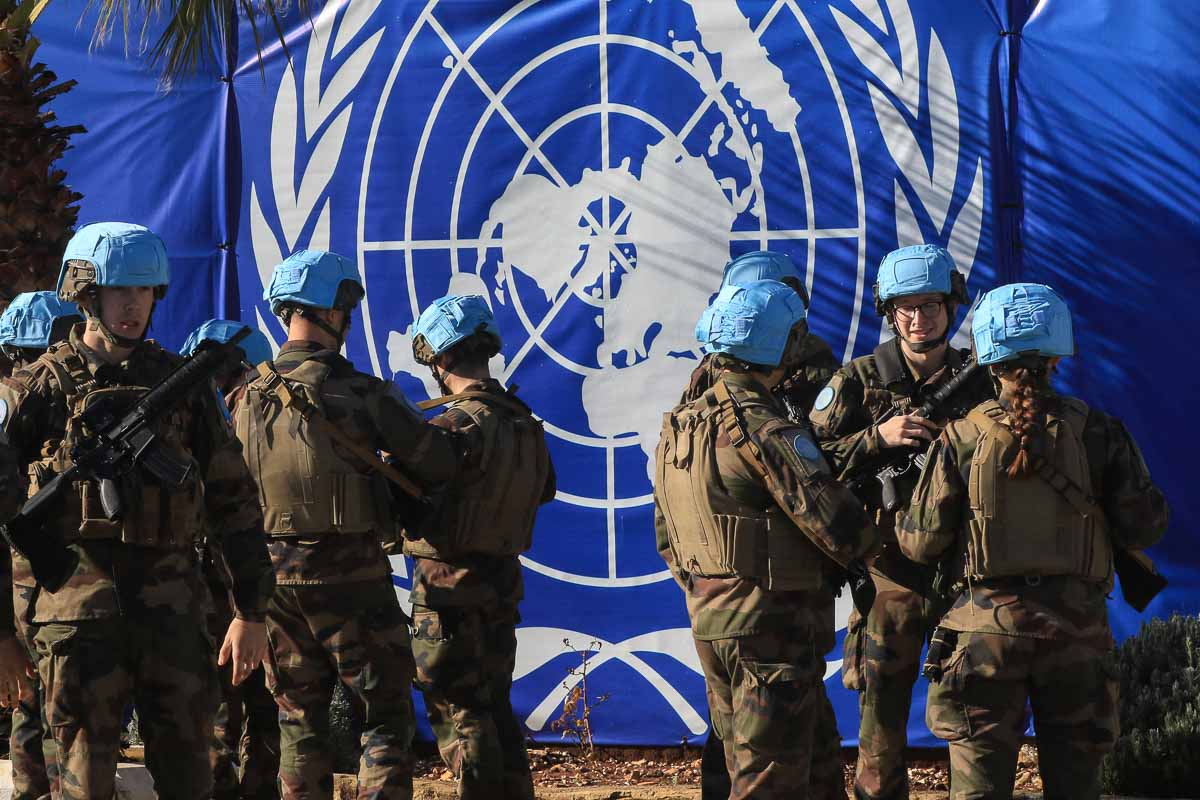
80th Anniversary of the United Nations
This month marks the 80th anniversary of the founding of the United Nations which was set up to 'save succeeding generations from the scourge of war' and 'foster international co-operation grounded in international law and the UN Charter.'
Over the last 80 years the UN has grown from 51 to 193 members. Its mission has also steadily expanded, evolving into areas such as creating the Sustainable Development Goals (SDGs) and bringing together countries annually to tackle climate change. Its peacekeepers have increasingly been involved in not only peace keeping but also large-scale programs for public health - such as the eradication of smallpox.
There is no set topic on the UN in the IGCSE History Course though it does feature in the ‘Who was to blame for the Cold War?’ theme which discusses the wartime conferences at Yalta and Potsdam in which Roosevelt got acceptance from the USSR and Britain for the establishment of the organisation. It also features in the next theme on US containment in the Cold War under the topic of the Korean War.
This anniversary provides a good opportunity to look more closely with students at the work of the United Nations in context of the 20th Century history course; its very absence in many of the topics, such as the Vietnam War, is interesting in itself - highlighting the dominance of the superpowers on the international world order during the Cold War.
It is also an apt time for students to discuss the current role of the UN in the 21st Century because this 80th Anniversary comes at a time when its very existence is being questioned. As Martin Griffiths (former UN under-secretary general for humanitarian affairs) writes in this Guardian article: The UN is in crisis. With the geopolitical picture at its most fractured in decades this great institution is desperately short of funding and, more importantly, relevance. Across the critical conflicts of the modern world – Ukraine, Palestine, Sudan and others – the UN still plays a vital humanitarian role, but is relegating itself to an increasingly marginal place in primary peacemaking.
So will there even be a UN by the time we get to its 100th Anniversary? Or is it still indispensable for global peace?
The following video sets out clearly the importance of the UN's goals and an overview of how these have changed over time; it highlights some of its successes as well as the problems it now faces.
But overall it stresses the importance of the UN to provide an organisation which connects people and countries and gives the opportunity to make the world a safer place.
Historical Association
Not directly relevant to IGCSE, but some of you might be interested in the short courses that the UK's Historical Association is now running online on different historical periods. If you want to get familiar with a new topic such as the French Revolution or the Crusades for A level or IB teaching - or even general interest, these lectures sound great for getting a solid overview of the key themes and debates. They are led by different academics, and you also get access to a wide range of resources on the topic:
Short courses / Historian / Historical Association (www.history.org.uk)
Become a Member | Register for free