Transformations and Tesselations
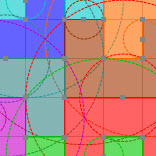
'Can you transform these shapes to make them tesselate? A jigsaw puzzle with a twist!'
Tessellations can be wonderfully hypnotic! With some it can really quite intuitive to tell how the shapes fit together to cover the plane, but in other cases it takes a little more thought! With this activity you are asked to create tessellations by constructing one of the shapes and then repeatedly transforming it so that it covers the plane. This would be easier if you had them as cut out pieces of paper, but by using dynamic geometry, you have to think more about the mathematics involved. Are the pieces translated, reflected, rotated or some combination of the above so that they fit together without leaving any gaps! It is a simple task to explain, but not so easy to do.
This page addresses the following item from the syllabus:
- Recognise, describe and draw reflections, rotations and translations
Resources
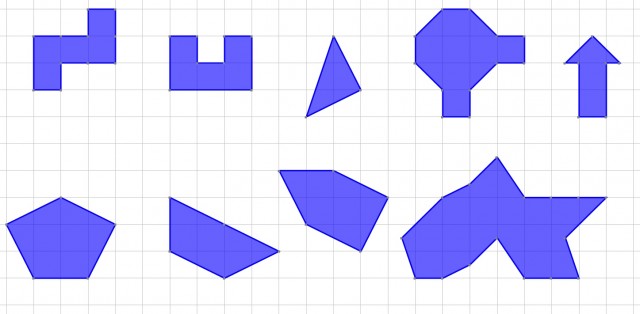
A set of tessellating shapes to start with can be printed off here  Transforming Tessellations. They are also shown below. The extend the problem, studuents can try to create their own tessellating shapes or find hundreds of examples with a quick search.
Here are some images of student work trying this task!
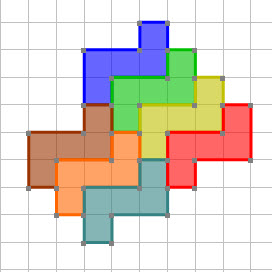
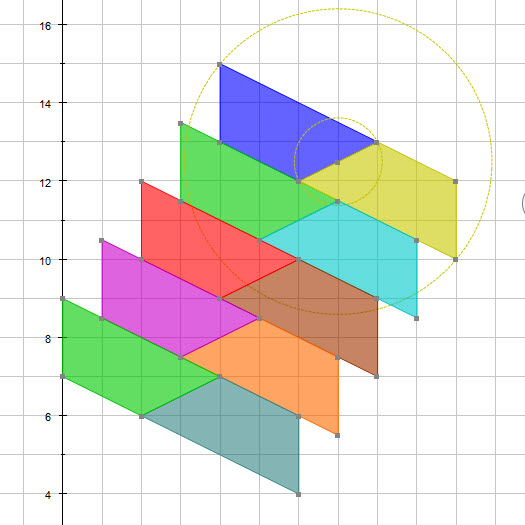
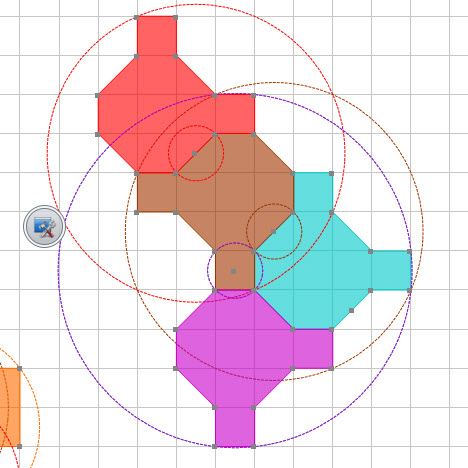
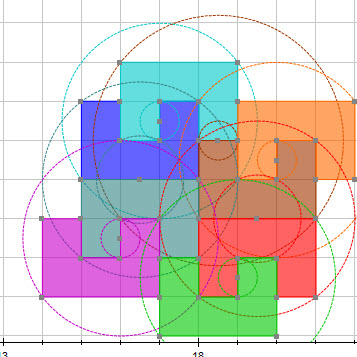
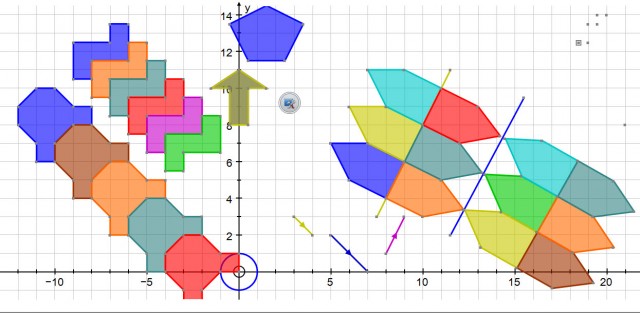
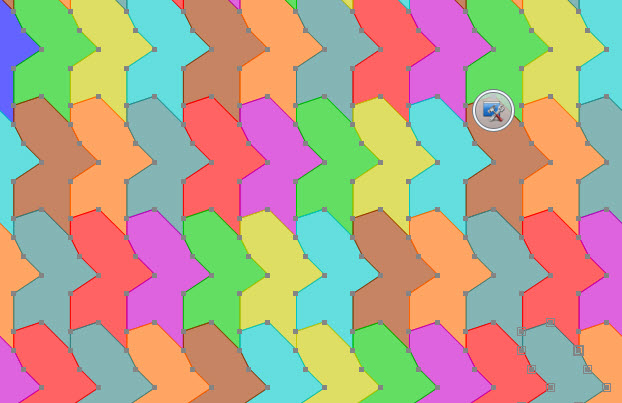
Description
- The way this task starts depends on students prior understadning of tessellations, transformations and ability with dynamic geometry software. The task follows nicely on from
 Congruent Halves and Transformations where students can practise transforming shapes with dynamic geometry.
 - As hinted above, depending on previous knowledge, teachers may choose to do a demonstration as a whole class to make sure the tasks is understood and help remind students how to do the mechanics of the task.
- Students should start with the shapes provided. This is usually enough of a challenge to keep them going for a while and does involve using all of the transformations.
- Following this, students can either try to repeat the exercise with their own shapes (thus introducing the challenge of working out their own shapes) or search for other tessellating shapes to work with.