Prime Cicadas
'They live underground for 13years, 17years or other prime numbers, emerge for 3 weeks, eat, mate and then disappear underground again for another 13 to 17 years - why?'
Syllabus item NON-calculator methods : product of prime factors
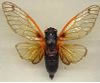
What is a Cicada? - Watch the two videos below to see Cicadas in action.
Why does the Cicada come out every 13years? Or 17 years? Eat, mate, and then disappear back under the ground again for another 13 or 17 years? Prime Numbers, having only two factors, may hold an explanation . . .
In which states to look for which Cicadas, and why do some emerge at 13, 17 etc years?
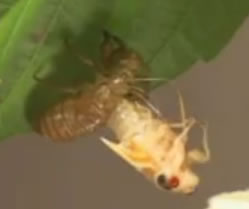
Click on the image to watch one emerge (set the playback time for x1.5)
Resources
 Cicada's and their Predators
 Cicada's Number Grids for experimentation using a computer.
 Highest Common Factor and Lowest Common Multiple practice questions
(NO LONGER AVAILABLE (requires Flash 6): Jenny Eather's excellent maths dictionary for kids (amathsdictionaryforkids.com).
Question: If Cicada’s predators (the Cicada has  lots of predators! What does “predator” mean?) appear every 5, 6, 11, 12 and 18 years, how many times in the first 100 years will:
- A 2 year, or 8 year, cycle Cicada be under threat?
- The 13 year cycle Cicada be under threat from predators?
- The 17 year cycle Cicada be under threat from predators?
Click on the worksheet above for a suggested structure to help investigate this question then try the "money investigation" etc.
Description
- Shade in a 1 to 100 number square to show how often a Cicada's predators appear in Cicada territory.
- Shade in the same grid with a different colour to represent how often Cicada's would appear if they appeared every 2 or 8 years.
- On the second grid, shade in the predators' appearances again, but this time shade in the actual 13yr and 17yr appearances of two different varieties of Cicada.
- By comparing the two grids, what theories might we come up with for why Cicada's appear every 13 or 17yrs as opposed to every 2 or 8yrs? What is special about the numbers 13 and 17?
- Multiples and Factors knowledge may be very useful in finding strategies for identifying when and which predators are likely to feast on a Cicada.
- Practice finding the Highest Common Factor (Greatest Common Divisor) and Lowest (Least) Common Multiple of a number.